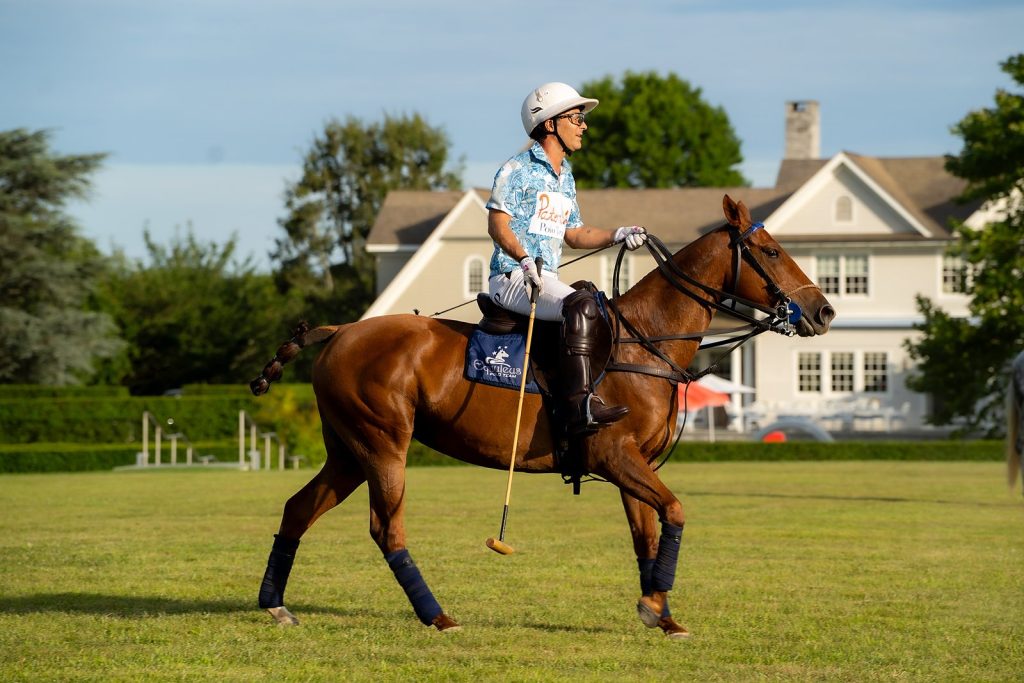
Polo for Beginners: How the Game Works, Explained in Five Minutes
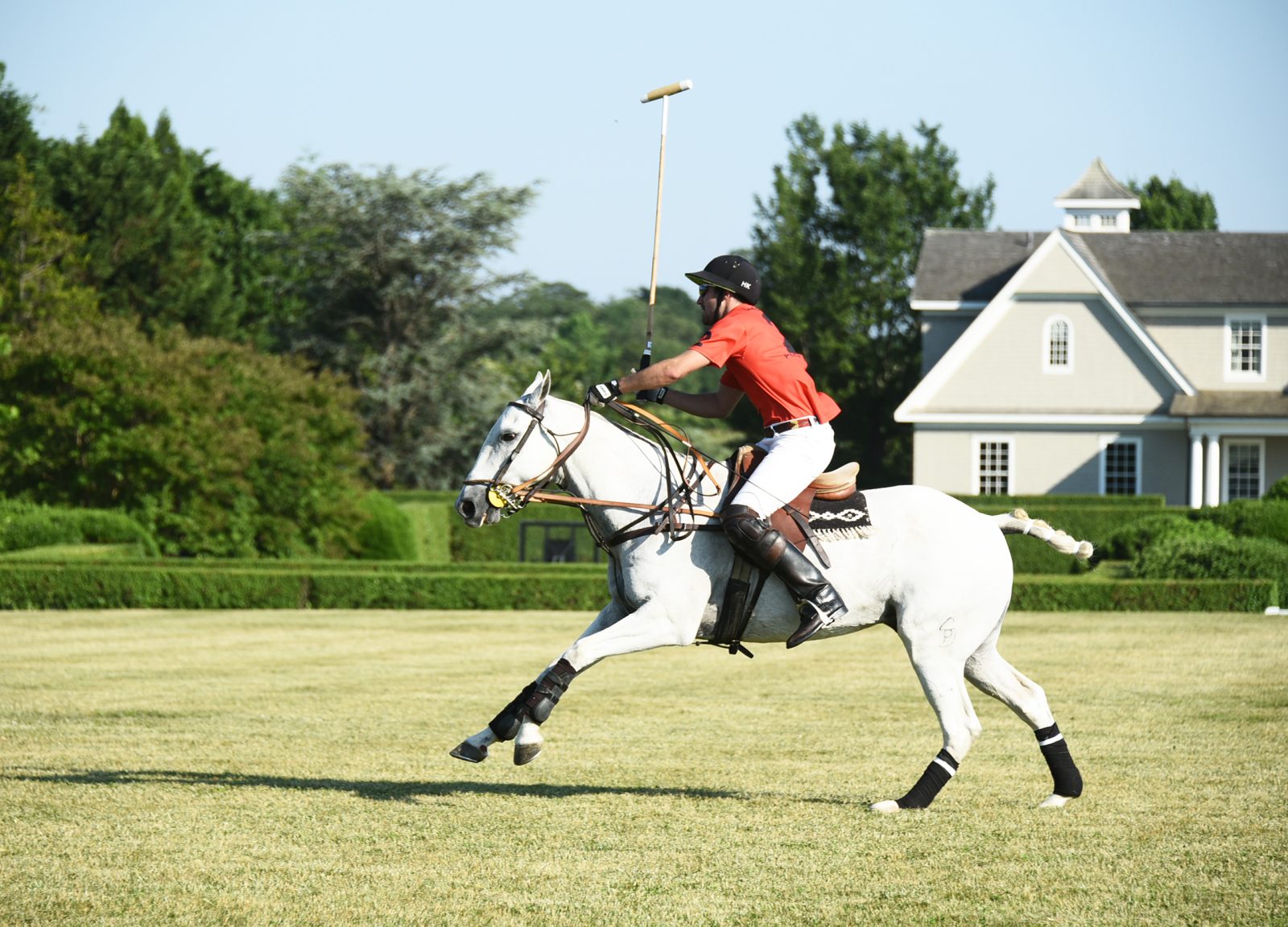
You have your tickets, your hat and your outfit. Now comes the question every first-timer asks quietly at the bar: how does polo actually work? This guide to polo for beginners explains everything you need to enjoy your first match, whether you watch from a VIP cabana or the sideline.
Polo Hamptons returns to Bridgehampton on Saturday, July 17 and Saturday, July 24, 2027. Get your tickets here.
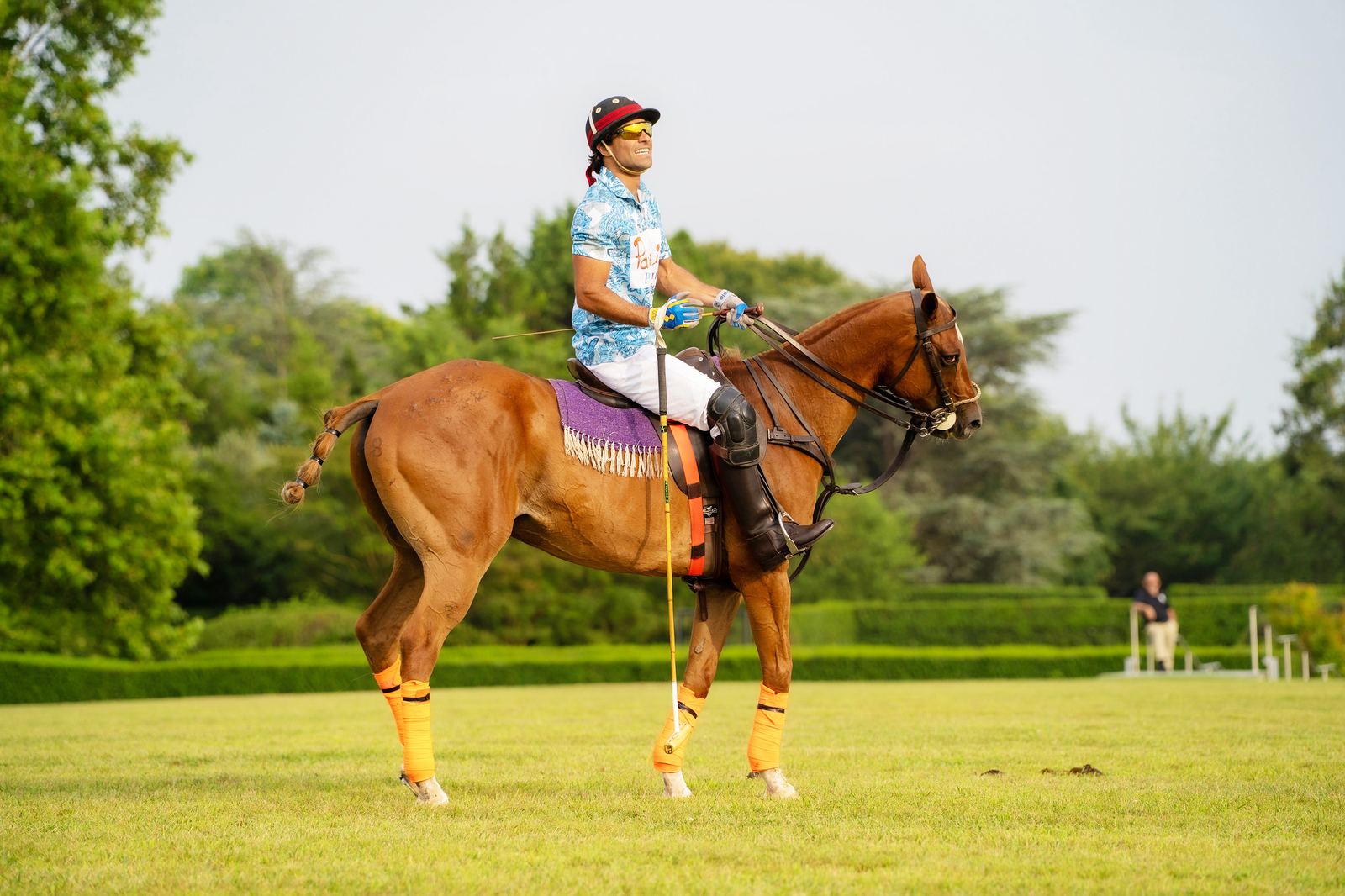
Polo for Beginners: The Game in One Sentence
Two teams of four players on horseback use long mallets to hit a small ball through the other team’s goal posts. The team with the most goals wins. That is really all you need to know to start enjoying a match.
Of course, there is more going on beneath the surface. However, most of the rules exist for one simple reason: to keep fast horses and riders safe. Once you understand that, the rest of the game starts to make sense.
A Very Short History
Polo is one of the oldest team sports in the world. Early versions were played on horseback in ancient Persia, and the game spread across Asia over the centuries. British officers learned the modern game in India in the 1800s and brought it home. Soon after, it crossed the Atlantic, where it became a favorite of East Coast society. To learn how the sport found its way out east, read our story on the history of polo in the Hamptons.
Polo for Beginners: The Field
A polo field is huge. It is up to 300 yards long and 160 yards wide, which is roughly the size of seven American football fields. There are goal posts at each end. Unlike soccer, there is no crossbar or net, so a goal counts at any height, as long as the ball passes between the posts.
Because the field is so big, the action moves fast. One moment the players are in front of you, and the next they are at the far end. So keep your eyes on the ball, and do not be surprised when the whole game suddenly turns around.
The Teams and Positions
Each team has four players, and every one of them has a job:
- Number 1: the main attacker, who focuses on scoring goals.
- Number 2: an aggressive all-rounder who attacks and defends.
- Number 3: usually the team’s best player, who directs the play like a quarterback.
- Number 4: the defender, also called the “back,” who protects the goal.
Players swap roles during the game as the play changes. Still, these positions give you a good idea of who is doing what.
Chukkers: How a Match Is Divided
A polo match is split into periods called chukkers. Each chukker usually lasts about seven minutes of playing time. High-goal tournament matches often have six chukkers. Meanwhile, many social and exhibition matches, like those played at summer events, are shorter.
Players change horses between chukkers because the horses work incredibly hard. In fact, a top player may bring several horses to a single match. Watch the horse lines at the edge of the field, and you will see grooms getting fresh mounts ready.
Scoring and Switching Sides
Every time a team scores, the teams switch directions. This keeps the game fair if the wind or the ground favors one end. So do not be confused when everyone suddenly heads the other way. For anyone learning polo for beginners, this is often the most surprising rule.
Polo Handicaps for Beginners
Every player has a handicap, rated from minus 2 up to 10 goals. In polo, higher is better. A 10-goal player is one of the best in the world, and very few people ever reach that level.
A team’s handicap is the total of its four players’ ratings. In handicapped tournaments, the team with the lower total gets a head start on the scoreboard. As a result, matches stay competitive even when the teams are uneven. The United States Polo Association sets the official rules and handicaps in the United States.
The Line of the Ball
This is polo’s most important safety rule. When the ball is hit, it creates an imaginary path called the line of the ball. The player following that line has the right of way. Other players cannot cross in front of them, because a crash at full speed could hurt both horses and riders.
Most fouls you will see come from someone crossing the line. So when the whistle blows and nobody seems to have done anything wrong, the line of the ball is usually the answer.
Ride-Offs and Hooking
Polo is a contact sport, within limits. Two moves you will see often:
- The ride-off: two riders press their horses side by side to push each other off the ball’s path.
- Hooking: a player uses their mallet to block an opponent’s swing.
Both moves are legal, but only when done safely. For example, a player cannot hook above the opponent’s shoulders or ride into them at a dangerous angle.
The Horses
They are called polo ponies, but they are full-size horses, often Thoroughbreds or Thoroughbred crosses. Good ones are fast, brave and quick to turn. Many players say the horse makes up most of the game. Indeed, a great pony can make an average rider look brilliant.
The Officials
There are two mounted umpires on the field, one for each half. In addition, a referee sits on the sideline and settles any disagreement between the umpires. When you see the umpires talking, they are usually deciding whether a foul was serious.
Halftime: Divot Stomping
At halftime, spectators walk onto the field to stomp the divots, the chunks of turf kicked up by the horses, back into place. It is one of polo’s best-loved traditions. So wear shoes you can walk in. Our guide to what to wear to a polo match has you covered.
How to Watch a Polo Match
Knowing the rules is one thing. Knowing where to look is another. Here are a few tips from our polo for beginners playbook to help you follow the action.
Follow the ball, then the riders. The ball moves fast, but the riders tell you where it is going. Watch which way the horses are turning, and you will usually see the next hit coming.
Watch the number 3. The best player on each team often wears the number 3. They control the pace of the game, so watching them helps you understand each team’s plan.
Listen for the whistle. When play stops, look at the umpires. Their hand signals show which team gets the penalty.
Notice the backhand. Players often hit the ball backward to change direction quickly. It is one of the most impressive shots in the game, and it can turn defense into attack in a second.
Enjoy the horses. Even if you lose track of the score, the speed and skill of the horses are a joy to watch. Pay attention to how quickly they stop and turn.
Finally, do not worry about missing something. The announcer usually explains key moments, and the friendly crowd at Polo Hamptons is always happy to help. Polo for beginners is really about enjoying the afternoon, and the rest comes naturally.
Polo Etiquette for Beginners
- Cheer for goals and great plays, but never wave or shout near the horses as they pass.
- Stay behind the sideline boards during play.
- Join the divot stomp, because everyone does it.
- Watch the umpires to understand why play stops.
- Ask questions. Polo regulars love explaining the game.
Quick Polo Glossary
- Chukker: a period of play, about seven minutes long.
- Divot: a chunk of turf kicked up by hooves.
- Handicap: a player’s skill rating, from minus 2 to 10.
- Line of the ball: the path of the ball; the player following it has the right of way.
- Mallet: the long-handled stick used to hit the ball.
- Ride-off: pushing an opponent off the line, horse against horse.
- Throw-in: how play starts, with the umpire rolling the ball between the two teams.
- Near side and off side: the left and right sides of the horse.
Polo for Beginners: Frequently Asked Questions
How long does a polo match last?
It depends on the number of chukkers. With breaks and halftime, a full tournament match can last around two hours. Social matches are often shorter.
Do players have to play right-handed?
Yes. For safety reasons, players must hold the mallet in their right hand. This keeps riders from colliding as they swing.
How fast do polo horses run?
Polo horses can reach speeds of around 35 miles an hour during a sprint.
Do I need to know the rules to enjoy a match?
Not at all. Many guests come for the atmosphere, the fashion and the people. However, knowing the basics in this guide to polo for beginners makes the game more exciting to watch.
Ready for Your First Match?
Now you know more than half the crowd. Put it to use at Polo Hamptons in Bridgehampton on Saturday, July 17 and Saturday, July 24, 2027, hosted by Christie Brinkley. Before you go, plan your weekend with our Hamptons summer 2027 events calendar. You can also see the celebrities who come to Polo Hamptons.
Reserve tickets and VIP cabanas at Polo Hamptons.
Shop the look: Bring a little Polo Hamptons home with caps, hoodies, tees, totes and more from PoloMerch.com.