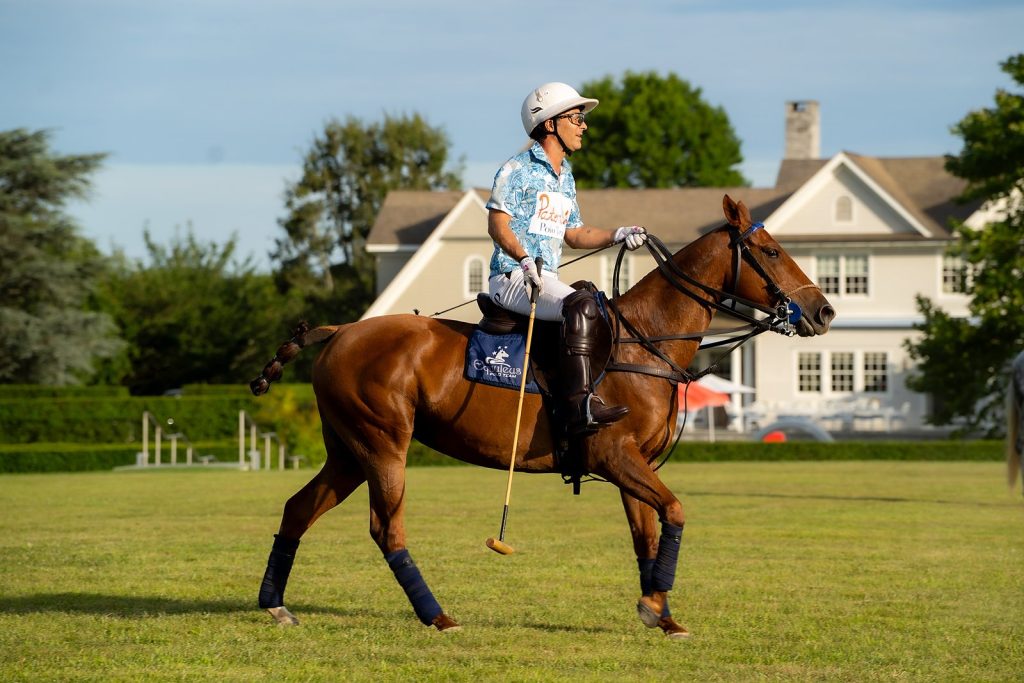
The Rules of Polo, Explained Before the Divot Stomp
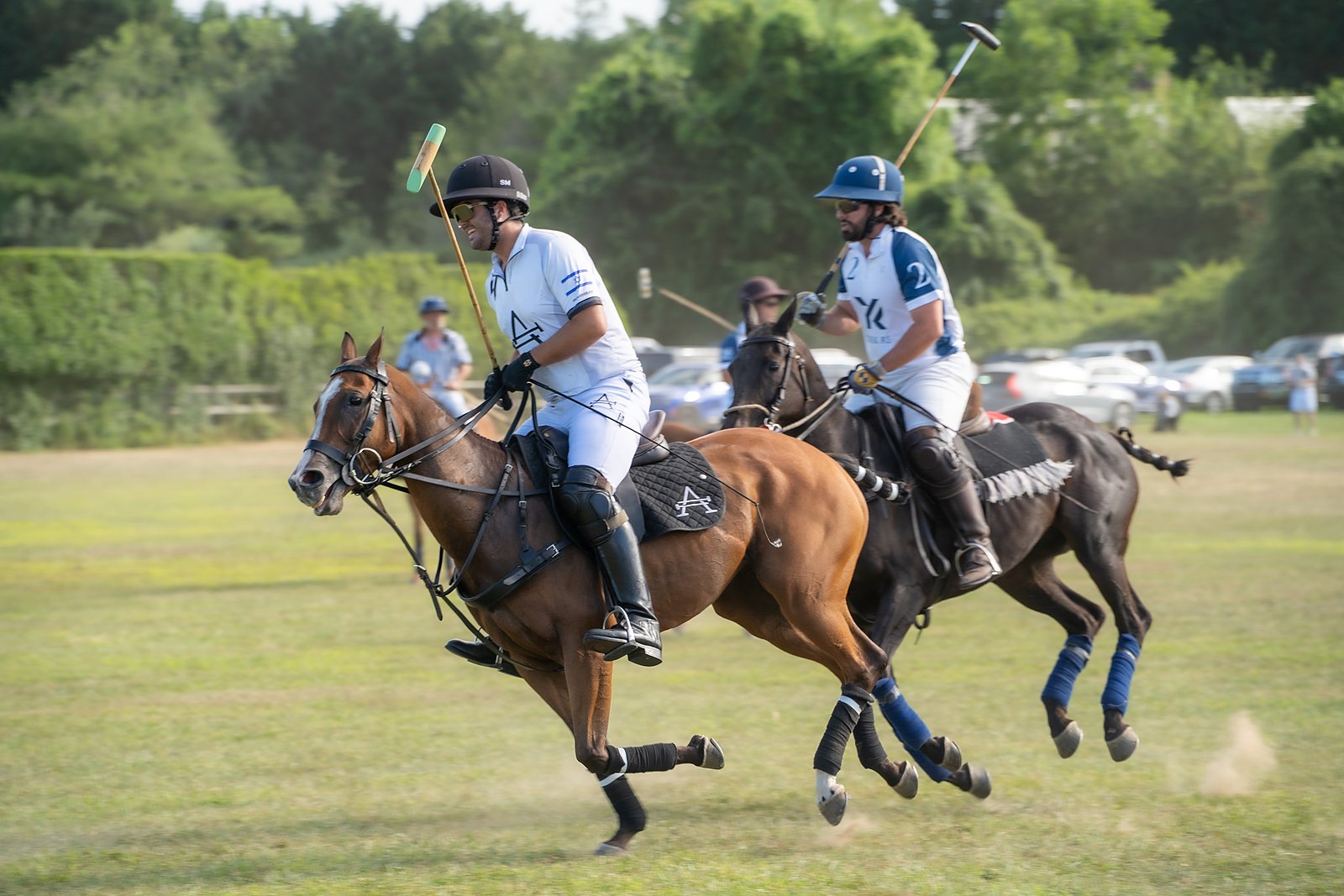
Nearly every rule in polo exists to keep half-ton horses from colliding at full gallop. Learn that one idea and the whistles start to make sense.
The whistle blows. Play stops. Nobody fell, nobody touched anybody, and the ball is sitting in the open grass. Under the tents along Lumber Lane, two hundred conversations pause on the same question: what just happened?
Almost always, the answer is the line of the ball. It is the one rule worth learning before you arrive at Polo Hamptons, because it explains most of the others. Eight riders on horses play polo at up to 35 miles an hour. At heart, the rulebook is a traffic code. Read it that way and you will be calling fouls before the umpire does.
How does a polo match work?
Two teams of four riders try to hit a small ball through the opponent’s goal with a long mallet. Goals are worth one point each. The field is up to 300 yards long and 160 yards wide, room for about seven American football fields. That makes it the largest field in organized sport. The goal posts stand 8 yards apart, and the teams switch ends after every goal so neither side keeps an advantage from wind or sun.
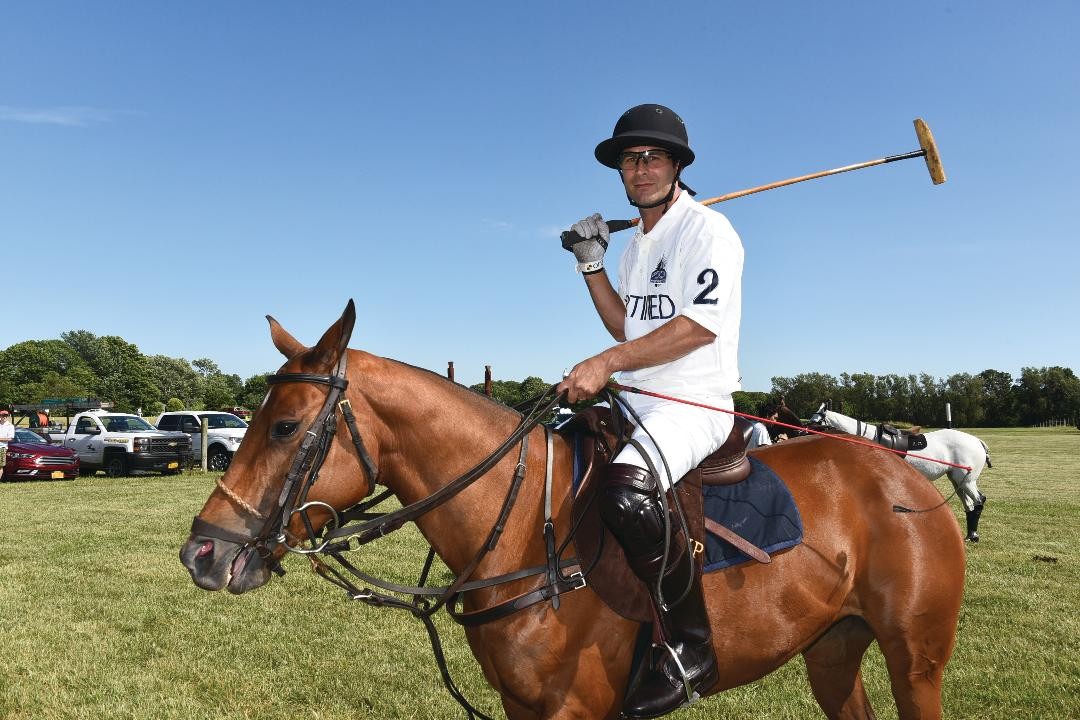
Players wear numbers 1 through 4, and each number is a job: No. 1 attacks, No. 4 defends, and Nos. 2 and 3 run the middle. Our piece on polo game strategy explains how those roles work together.
What is a chukker?
A polo match is divided into periods called chukkers (or chukkas), each about seven minutes of play. High-goal tournaments play six chukkers. Polo Hamptons plays four, with a break at halftime for the divot stomp.
Players change horses between chukkers, and often in the middle of one. A polo pony gallops hard for a single chukker and then rests, which is why each player arrives with a string of several horses. The pony lines at the edge of the field are worth a walk during halftime; they are where the afternoon’s real logistics happen.
What is the line of the ball?
When the ball is struck, it travels along a path. That imaginary path, extended forward, is the line of the ball, and the player who is following it most closely has the right of way. Other riders may approach the line at an angle and challenge for the ball. Still, no one may cross in front of the player with the right of way close enough to risk a collision.
Crossing the line is the most common foul in polo. When the whistle blows and nobody seems to have touched anyone, a rider almost certainly cut across the line in front of an opponent. The rule exists because a horse at full gallop cannot stop or swerve in time.
What contact is allowed in polo?
Polo permits two kinds of physical defense. The ride-off is shoulder-to-shoulder contact between two horses running side by side, used to push an opponent off the line and away from the ball. The hook is blocking an opponent’s swing with your own mallet, legal only when you are on the same side as the swing and below shoulder height.
However, some play is never allowed. That includes crossing the line, riding into an opponent at an angle, hooking from across a horse and swinging the mallet dangerously. It also covers any play the umpires judge to put a horse or rider at risk. Two mounted umpires call the game on the field, with a referee on the sideline who settles disagreements between them.
Why can’t you play polo left-handed?
Every polo player holds the mallet in the right hand. The rule took effect internationally in 1975 for a simple reason. Otherwise, two players approaching the ball from opposite sides, one swinging with each hand, would meet head-on. Requiring right-handed play means riders always pass each other in a predictable pattern. Naturally left-handed players learn to play right-handed, and many of the best do it well.
What does a polo handicap mean?
Every player carries a handicap, rated in goals from -2 for a beginner to 10 for the best in the world. Fewer than a dozen players hold a 10-goal handicap at any time. A team’s handicap is the sum of its four players. Organizers group tournaments by that total, so a “16-goal” event allows teams rated up to 16 goals combined.
The system lets amateurs and professionals play on the same team. A patron rated 0 or 1 can play beside professionals rated 7 or 8, and the team still fits the tournament limit. It is one reason polo remains a sport where the owner of the horses is also on the field.
How are fouls penalized?
Penalties are free hits. Their distance depends on how serious the foul was and where it happened. Hits come from 30, 40 or 60 yards out, or from the spot of the foul. The most severe sanction is a penalty goal. Umpires award it when a dangerous foul stops a goal that was certain to be scored.
Now you know enough to read the next whistle. A rider cut across the line, an umpire raised a mallet, and the team that was fouled lines up for a free hit. Look up from your glass, find the player who had the right of way, and you will see it before the people around you do.
For where these rules came from, read A History of Polo. For famous names who learned them the hard way, see Celebrities Who Have Played Polo.
Frequently asked questions
How long is a polo match? A polo match lasts about one and a half to two hours with breaks. Each match has chukkers of about seven minutes. High-goal matches play six, while Polo Hamptons plays four, with a halftime divot stomp.
How many players are on a polo team? A polo team has four players, numbered 1 through 4. No. 1 is the forward, Nos. 2 and 3 control the middle of the field, and No. 4 is the back who defends the goal.
Why can’t you play polo left-handed? Polo requires every player to hit with the right hand, a rule adopted in 1975 for safety. Mixed left- and right-handed swings would bring riders head-on at full gallop, so the rule keeps traffic predictable.
Shop the look: Bring a little Polo Hamptons home with caps, hoodies, tees, totes and more from PoloMerch.com.